
bonus deposit- up to 500%
Home → Blackjack
Blackjack at Jilibets: Variants, Rules and Payouts
Shoe, Cut Card, and 75 Percent Penetration
A shoe with 6 decks of cards is used in some Blackjack variants, with a cut card placed approximately 75 percent into the shoe. This penetration level influences the house edge, with deeper penetration generally reducing it for the player. For instance, 6 Decks, S17, DAS, DOA, Auszahlung 3:2, Basisstrategie has a house edge of 0.46%.
The concept of shoe penetration is a key factor in calculating the house advantage, impacting the overall RTP. A shoe with 8 decks and standard rules, for example, might present a different house edge compared to a 6-deck game with similar rules. Understanding this mechanic is crucial for players seeking optimal conditions.
The placement of the cut card affects how many cards are dealt before the shoe is reshuffled, directly impacting the probabilities within the game. Deeper penetration, meaning more cards are dealt from the shoe, can lead to a lower house edge for certain game variations, particularly those with fewer decks.
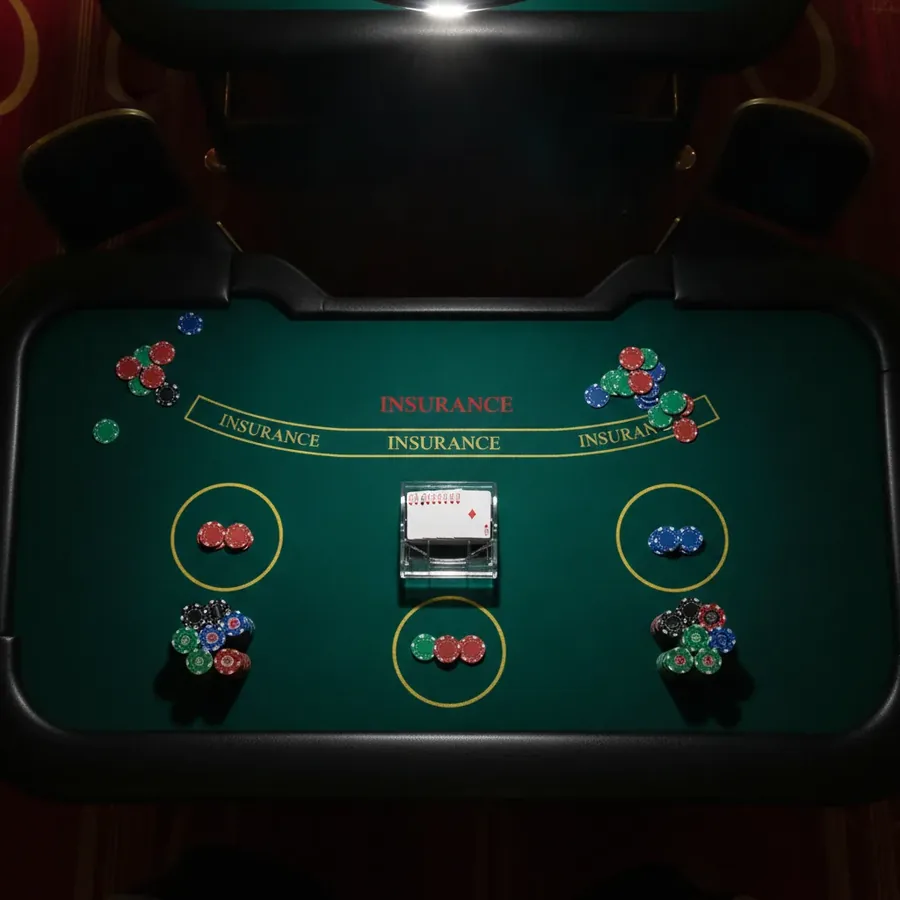
No Double Down on three cards
Certain Blackjack variants restrict the ability to double down after the initial two cards have been dealt. In the Blackjack 6 Decks, S17, DAS, DOA, Auszahlung 3:2, Basisstrategie game, doubling down is permitted on any two cards, indicating a more liberal rule set. This offers players more strategic flexibility.
The absence of a 'Double Down on three cards' rule in some games can alter player strategy, especially in situations where a player might wish to double down after hitting on their initial two cards. This restriction means players must make their doubling decision on the initial two cards only.
The ability to Double After Split (DAS) is a positive rule modification that improves the RTP by approximately 0.14 percentage points. However, the specific restriction on doubling down on three cards means that even with DAS, a player cannot double down if they have already received a third card.
What doesn't count as Blackjack after Split?
A Blackjack hand resulting from a split pair does not always count as a natural Blackjack. For example, if a player splits two Aces and receives a 10 on one of them, resulting in a total of 21, this is not considered a natural Blackjack in many standard rule sets.
In many Blackjack variants, a hand totaling 21 after a split is treated as a regular score of 21, not an immediate Blackjack win that pays 3:2. This distinction is important as a natural Blackjack typically has a higher payout compared to a 21 achieved through splitting.
The specific rules for what constitutes a Blackjack after a split can vary between game providers and individual table rules. Players should always check the game’s specific paytable and rules to understand how hands formed after splitting are evaluated, especially concerning the 3:2 payout.
Split, Double Down, and Surrender in Numbers
Blackjack Surrender offers a rule where a player can give up their hand after the dealer checks for blackjack, forfeiting half their bet. This rule modifier can improve the RTP by approximately 0.08 percentage points compared to games without surrender.
The Double Down (DAS) option, which allows players to double their bet after receiving their first two cards, improves the RTP by around 0.14 percentage points. Resplitting Aces (RSA) further enhances the player's return by approximately 0.08 percentage points.
The decision to surrender a hand in Blackjack, when available, is a strategic choice that can mitigate losses. In Blackjack Surrender, the player loses 50% of their bet. This is distinct from other actions like splitting or doubling down, which are offensive moves to increase potential winnings.
What Percentage Does Blackjack Count Towards Bonus?
Table games, including Blackjack, contribute only 10% towards the wagering requirements of bonuses. This means that for every €100 wagered on Blackjack, only €10 will count towards fulfilling the bonus turnover.
Slots contribute 100% towards the bonus wagering requirements, making them a more efficient way to clear bonus funds compared to Blackjack. A €100 wager on slots counts the full €100 towards the bonus turnover.
Given that Blackjack only counts 10% towards the bonus turnover, players aiming to fulfil wagering requirements quickly may find slots a more advantageous option. For example, to fulfil a €1,000 wagering requirement, a player would need to wager €10,000 on Blackjack, but only €1,000 on slots.
Blackjack variants at a glance
| Variant | Payout | House edge | Rule | Bet range |
|---|---|---|---|---|
| Blackjack 6 Decks, S17, DAS, DOA, Auszahlung 3:2, Basisstrategie | 99.54% | 0.46% | Dealer steht auf Soft 17; Verdopplung auf jeder Zweierkarte; Verdopplung nach Split erlaubt; keine Aufgabe. Basisstrategie ist für diesen Wert zwingend | Blackjack 3:2, normaler Gewinn 1:1, Insurance 2:1 |
| Blackjack Surrender (Late Surrender) – Regel-Effekt | n.a. (Regel-Modifikator) | −0.08 Prozentpunkte | Spieler gibt Hand nach Dealer-Blackjack-Prüfung auf, verliert die Hälfte des Einsatzes. Verbessert RTP um ca. 0.08 Prozentpunkte. Early Surrender ist wesentlich wertvoller (bis −0.6 Prozentpunkte), aber extrem selten. | Rückzahlung 50% des Einsatzes |
| Blackjack Insurance / Versicherung (6–8 Decks) | 92.53% | 7.47% | Separate Nebenwette bis 50% der Hauptwette, wenn der Dealer ein Ass hat. Basisstrategie schreibt IMMER Ablehnung vor (außer Karten zählen bei True Count ≥ +3). Bei einem Deck Vorteil ≈ 5.88% | Insurance 2:1 |
| Blackjack Auszahlung 6:5 statt 3:2 (6 Decks) | 98.15% | 1.85% | Ersatz von 3:2 durch 6:5 fügt exakt +1.39 Prozentpunkte zum Vorteil des Casinos hinzu – stärker als jede andere Regeländerung. Bei $10 Einsatz zahlt Blackjack $12 statt $15. | Blackjack 6:5, Gewinn 1:1 |
| Blackjack Split / Double / H17 – Regel-Effekte | n.a. (Regel-Modifikatoren) | H17 +0.22 Prozentpunkte; RSA −0.08 Prozentpunkte; DAS −0.14 Prozentpunkte | Dealer Hits Soft 17 verschlechtert RTP um 0.22 Prozentpunkte; Resplit Aces verbessert um 0.08 Prozentpunkte; Double After Split verbessert um ca. 0.14 Prozentpunkte; 6 Decks statt 8 – ca. 0.02 Prozentpunkte. | Double – Einsatz ×2 mit einer Karte; Split – bis 4 Hände; Ass-Split meist mit einer Karte. |
| Blackjack Ein Deck, klassische Regeln, 3:2 | 99.85% | 0.15% | Weniger Decks = niedrigerer Vorteil; ein Deck gibt ca. −0.48 Prozentpunkte gegenüber 8 Decks. Oft durch 6:5 Auszahlung kompensiert. | Blackjack 3:2, Gewinn 1:1 |
One Deck vs Eight Decks in House Edge
Blackjack Ein Deck, with classic rules and a 3:2 payout, offers a player RTP of 99.85%, resulting in a house edge of just 0.15%. This significantly lower edge compared to other variants is attributed to the reduced number of decks used in the shoe.
Conversely, Blackjack 6 Decks, adhering to S17 and DAS rules with a 3:2 payout, presents a slightly higher house advantage at 0.46%, with a corresponding RTP of 99.54%. The difference in house edge between one-deck and six-deck games can be approximately 0.48 percentage points.
The reduced house edge in single-deck blackjack games directly translates to better player returns over the long term. While some casinos may compensate for this by altering payouts to 6:5, it fundamentally impacts the game's inherent fairness.
Clicked Too Late: Hand Is Automatically Held
The Blackjack Insurance side bet, typically found in games with 6-8 decks, carries a substantial house edge of 7.47%, with an RTP of 92.53%. This bet is offered when the dealer shows an Ace, allowing players to wager up to 50% of their main bet.
Standard player strategy dictates avoiding the Insurance bet unless engaging in card counting with a True Count of +3 or higher. Even with a single deck, the house edge for this side bet remains around 5.88%, making it a consistently unfavorable option.
The consequence of not understanding this is a significant reduction in potential returns. For a €10 bet, opting for insurance could lead to an average loss of €0.75 due to the elevated house edge, compared to the main game's low advantage.
Check table limit before the first bet
The Blackjack Auszahlung 6:5 variant, played with 6 decks, significantly increases the casino's advantage to 1.85%, with a corresponding RTP of 98.15%. This shift from the standard 3:2 payout for a blackjack dramatically alters the game's profitability for players.
A standard €10 bet on a blackjack in a 3:2 game would yield €15, whereas in a 6:5 game, it only pays out €12. This reduction of €3 per blackjack directly adds approximately 1.39 percentage points to the house edge.
This rule modification is more impactful than most other rule changes, illustrating the importance of scrutinizing the payout structure before placing any bets. Players should verify the blackjack payout ratio to ensure they are playing under the most favorable conditions.
Surrender vs Playing Out on 16 vs 10
Blackjack Surrender, specifically Late Surrender, acts as a rule modifier that can improve the RTP by approximately 0.08 percentage points. This option allows players to forfeit their hand after the dealer checks for blackjack, losing half of their initial stake.
While Late Surrender offers a modest benefit, Early Surrender is considerably more advantageous, potentially reducing the house edge by up to 0.6 percentage points, though it is a rare rule to encounter. The difference lies in the timing of the surrender option.
For a player holding a 16 against a dealer's 10, utilizing the surrender option when available can mitigate losses significantly compared to playing the hand out. This strategic choice, when permitted by the table rules, directly impacts the player's overall return on investment.
Unlimited seats via a split dealer hand
The Blackjack Liberal Vegas Strip variant offers the most favorable rules for players, boasting an RTP of 99.72% and a house edge of only 0.28%. This combination includes dealer standing on soft 17 (S17), double after split (DAS), resplit capabilities, and late surrender.
Rule modifiers such as Dealer Hits Soft 17 (H17) can increase the house edge by 0.22 percentage points, while Double After Split (DAS) and Resplit Aces (RSA) can decrease it by approximately 0.08% and 0.14% respectively. These adjustments highlight the impact of specific rules on game outcomes.
The specific combination of liberal rules in Vegas Strip Blackjack, including DAS and resplitting, allows for more strategic doubling and splitting opportunities. These options, when utilized correctly, can lead to a lower house advantage and potentially higher returns for the player.
Ignored Basic Strategy Chart: 1 Percent Wasted
When a player deviates from basic strategy in Blackjack Liberal Vegas Strip, an RTP of 99.72% can be significantly reduced. For instance, failing to utilize the liberal rules like S17 + DAS + Resplit + Late Surrender, which offers the most favourable combination for the player, means missing out on the optimal house edge of 0.28%.
Ignoring the basic strategy chart means a player might make suboptimal decisions, such as hitting on a hard 17 or splitting a pair of tens. Such incorrect plays increase the house edge, effectively costing the player value on every hand played. This is particularly detrimental in games with a low initial house advantage.
The cost of not adhering to basic strategy translates directly into a lower return to player. For every 100 EUR wagered, a player who consistently makes mistakes can expect to lose more than the 0.28% house edge calculated for optimal play. This difference can accumulate rapidly over extended play sessions.
Why Loss Progression Quickly Reaches Table Limit
In a game like Blackjack Liberal Vegas Strip with a low house edge of 0.28%, a losing streak can still deplete a player's bankroll rapidly, especially if employing a loss progression strategy. The standard deviation of 1.15 indicates that significant swings in fortune are possible within short periods.
If a player employs a strategy that increases their bet after each loss, such as Martingale, a series of consecutive losses, which is statistically plausible even in a favourable game, can quickly escalate the bet size. This can lead to reaching the table limit of 5,000 EUR on a Live table like Quantum Blackjack Plus Live.
The risk is further amplified by the payout structure. A natural Blackjack pays 3:2, but a normal win pays 1:1. If a player is on a losing streak and reaches a bet of 5,000 EUR, a single loss can wipe out a substantial portion of their initial bankroll, potentially forcing them to stop playing or risk losing more than intended.
Splitting tens costs expected value: better stand
Splitting a pair of tens in Blackjack is a common misconception that leads to a loss of expected value. In Blackjack Liberal Vegas Strip, with its favourable rules, maintaining a pair of tens as a hard 20 is a very strong hand, offering a high chance of winning against most dealer upcards.
The RTP for Blackjack Liberal Vegas Strip is 99.72%, with a house advantage of 0.28%. Decisions that deviate from basic strategy, such as splitting tens, will increase this house advantage. A player might be tempted to split, but this action typically results in a lower overall return compared to standing on 20.
By splitting tens, a player is effectively breaking a strong hand into two weaker ones, which are more likely to result in losses or at best, equal the initial bet. The optimal decision, according to basic strategy, is always to stand on a pair of tens, preserving the strong 20 and maximizing the chance of winning the hand.
Double Down vs Simple Hit on 11
In many blackjack variants, including those found at Jilibets, having a hand total of 11 presents a prime opportunity to double down. This strategic move allows a player to double their bet in exchange for receiving only one more card, aiming for a strong total of 21.
The Blackjack Liberal Vegas Strip offers liberal rules, including the ability to Double After Split (DAS). This enhances the player's advantage, making doubling down on an 11 even more profitable. The RTP of 99.72% reflects the favourable conditions when players correctly utilize such options.
Choosing to double down on an 11, as opposed to a simple hit, significantly increases a player's expected winnings. This is because the probability of drawing a ten-value card (10, J, Q, K) to make 21 is high, thus maximizing the potential return on a favourable situation.
What a Natural Blackjack Practically Pays Out
A natural Blackjack, achieved by drawing an Ace and a ten-value card on the initial two cards, is the highest-ranking hand. In Blackjack Liberal Vegas Strip, this hand pays out at a superior 3:2 ratio, significantly improving the player's return on their wager compared to standard wins.
The difference in payout between a 3:2 and a 6:5 Blackjack is substantial. For a 10 EUR bet, a 3:2 payout yields 15 EUR, while a 6:5 payout only returns 12 EUR. This 3 EUR difference per natural Blackjack directly impacts the game's overall RTP, making 3:2 much more favourable to the player.
Considering the RTP of 99.72% for Blackjack Liberal Vegas Strip, the 3:2 payout for a natural Blackjack is a critical component of this high return rate. It directly reduces the house advantage from what it would be with a less favourable payout, such as the 6:5 offered on some other tables.
Contact
Live - online chat
Banking









Providers












jilibet Casino 2024